





HAL Exits India’s 5th-Generation Fighter Jet Race, Private Players Move Ahead
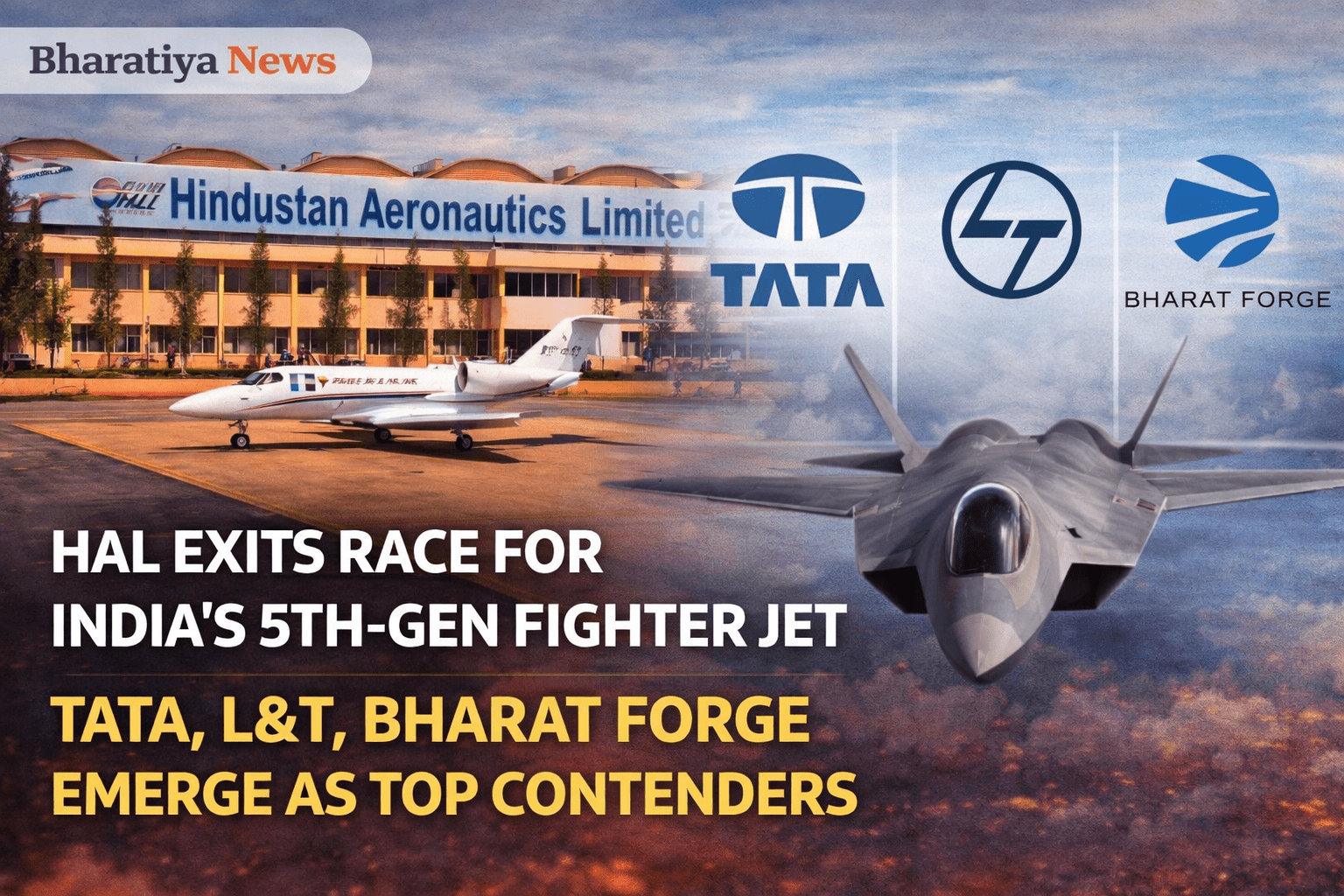
Hindustan Aeronautics Limited (HAL), India’s leading aerospace public sector undertaking, has exited the competition to develop the country’s indigenous 5th-generation fighter aircraft under the Advanced Medium Combat Aircraft (AMCA) programme. The move is reportedly linked to HAL’s extensive existing order book and ongoing delivery commitments.
This marks a significant moment for India’s defence aviation landscape, as it is the first time HAL will not be directly involved in the nation’s most ambitious next-generation fighter aircraft development project.
Why HAL Stepped Back
Sources familiar with the decision indicate that HAL’s current workload—particularly its responsibility for the Light Combat Aircraft (LCA) Tejas programme and large helicopter manufacturing contracts—played a key role in the exit. With multiple high-value defence projects already underway, the government is understood to have encouraged HAL to focus on timely execution of existing deliveries.
HAL is currently engaged in producing additional Light Combat Helicopters (LCHs) and other critical platforms for the Indian Armed Forces, with deliveries stretching well into the next decade.
Private Sector Firms in Focus
With HAL out of contention, the AMCA programme has opened the door wider for private defence manufacturers. Three consortiums have been shortlisted for the next phase of evaluation:
- Tata Group, in partnership with BEL and Dynamatic Technologies
- Larsen & Toubro (L&T), along with key defence technology partners
- Bharat Forge-led consortium, part of the Kalyani Group, working with BEML and Data Patterns
Among these, Tata Group is considered to have an edge due to its prior experience in setting up a final aircraft assembly line for the C-295 transport aircraft in collaboration with Airbus.
What the Selection Process Involves
The selection committee is assessing bidders across multiple parameters, including:
- Technical expertise
- Manufacturing and integration capability
- Past experience in aerospace development
- Financial strength and scalability
The final development partner is expected to be announced within the next three months.
Roadmap for AMCA
The selected consortium will work closely with the Aeronautical Development Agency (ADA) to develop five AMCA prototypes by 2031, supported by an initial government allocation of approximately ₹15,000 crore. Upon successful testing and certification, the Indian Air Force is expected to place an order for around 120 aircraft, with potential for expansion.
Broader Defence Industry Impact
HAL’s exit signals a gradual shift in India’s defence manufacturing ecosystem, with private players taking on larger, more complex platform-level responsibilities. Defence analysts see this as a step aligned with the government’s push for diversified production capacity and reduced dependence on a single manufacturer.
At the same time, HAL remains central to India’s defence preparedness through its ongoing fighter, helicopter, and aircraft programmes, ensuring continuity in critical defence supplies.
(Except for the headline, this story has not been edited by Bharatiya News staff and is published from a syndicated feed.)
