


Iran Enters Survival Mode After Assassination of Supreme Leader Ayatollah Ali Khamenei
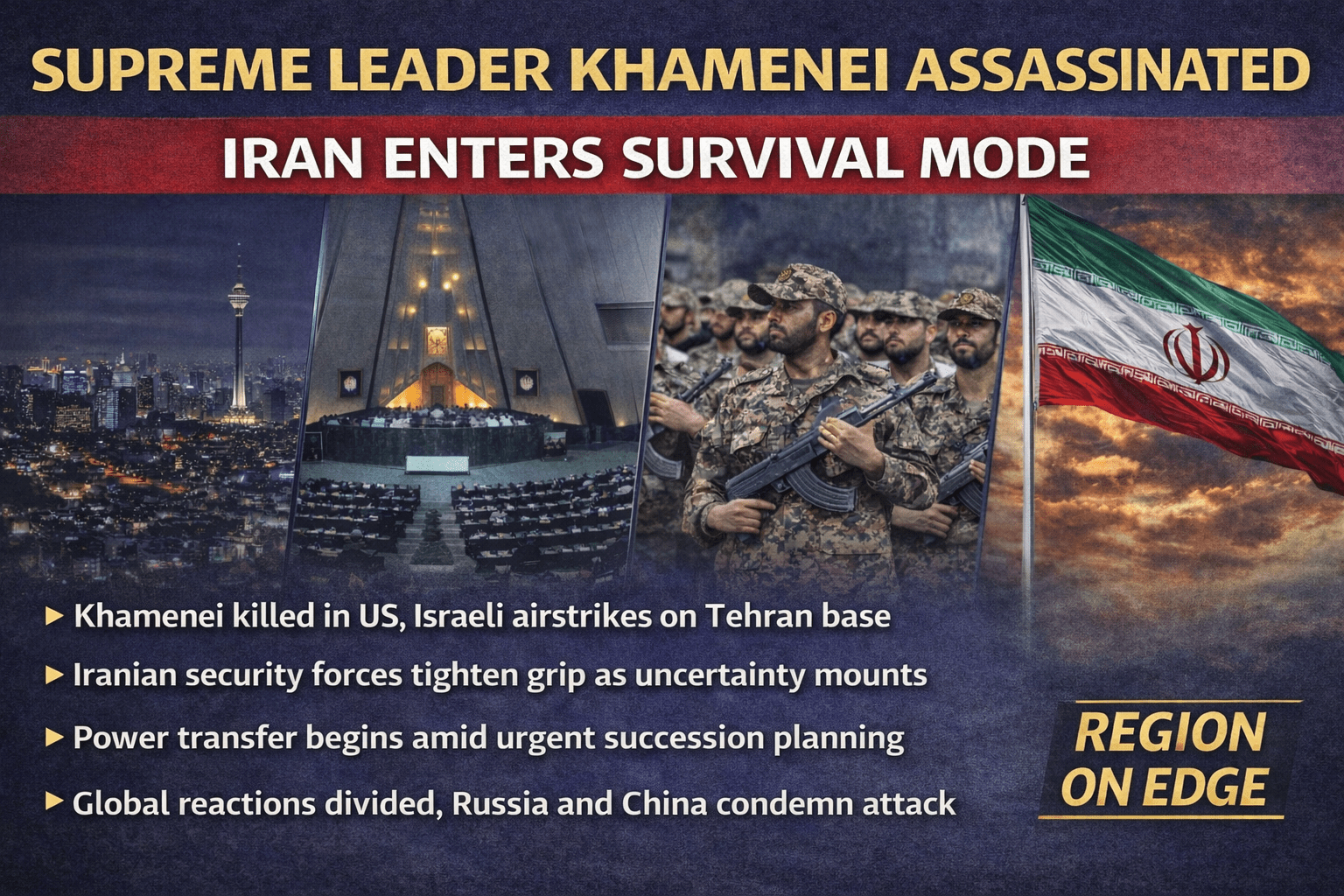
Iran has entered a period of deep uncertainty and heightened security following the assassination of Supreme Leader Ayatollah Ali Khamenei, a development with potentially seismic consequences for the Middle East and global geopolitics.
The 86-year-old cleric, who led the Islamic Republic for nearly four decades, was reportedly killed in coordinated US and Israeli airstrikes targeting a secure compound in central Tehran. Satellite images circulating internationally show extensive destruction at the site. Iranian state media confirmed multiple casualties, including members of Khamenei’s family.
A Nation on Edge
Security has been dramatically tightened across Iran. Residents in Tehran and other major cities have reported the deployment of armed police and volunteer paramilitary forces on the streets. While isolated videos on social media appeared to show small groups celebrating the news, there has been no widespread uprising or organized attempt to challenge the government’s authority.
Analysts suggest that, for now, the Islamic Republic’s core power structure remains intact.
“Iran’s conventional military and the Islamic Revolutionary Guard Corps remain united and in control of the security apparatus,” said Ellie Geranmayeh, senior policy fellow at the European Council on Foreign Relations.
The powerful Islamic Revolutionary Guard Corps (IRGC), originally established to protect the regime and the Supreme Leader, is expected to play an even more dominant role in the coming weeks.
Constitutional Transition Begins
Under Iran’s constitution, governance in the immediate aftermath of a Supreme Leader’s death transfers temporarily to a council composed of the heads of the executive, judiciary, and legislature.
President Masoud Pezeshkian, senior judiciary officials, and a leading cleric from the Guardian Council are expected to assume interim responsibilities while the Assembly of Experts convenes to select a successor.
Speculation over succession has intensified. Some observers believe a decision may already have been made behind closed doors, given the speed with which Khamenei’s death was announced.
Regional Shockwaves
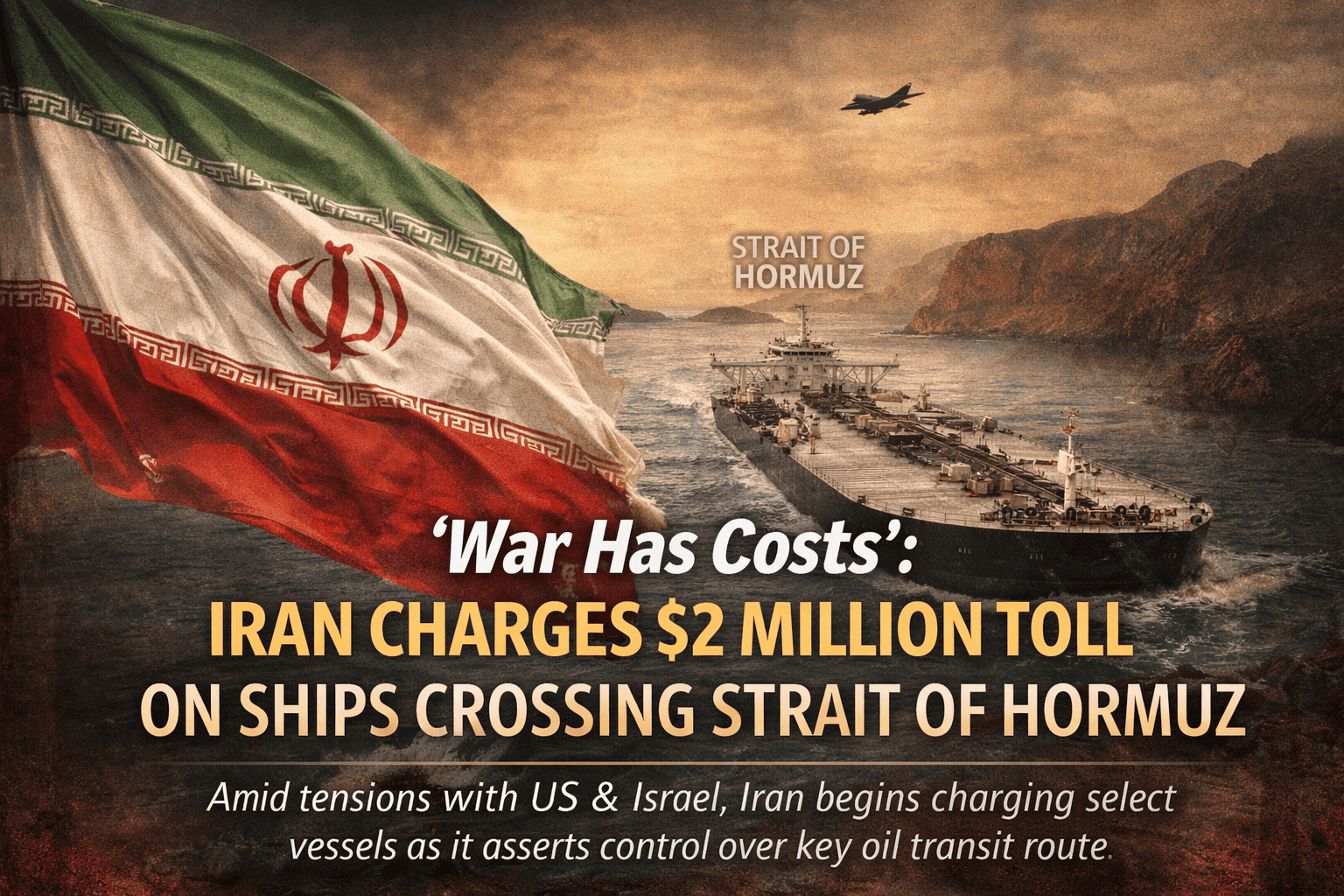
Khamenei’s assassination comes amid ongoing hostilities in the Persian Gulf and heightened tensions with Israel and the United States. For decades, Iran positioned itself as a central adversary of both nations, expanding its regional influence through allied militias and political networks stretching from Iraq to Lebanon and Syria.
His death raises urgent questions about the future of Iran’s foreign and nuclear policies. While Khamenei had long maintained a religious edict opposing nuclear weapons, senior Iranian officials in recent years hinted at potential doctrinal shifts if national security were threatened.
The International Atomic Energy Agency had previously reported “regular activity” at key Iranian nuclear facilities, fueling global scrutiny.
Divided Global Reactions
International reactions have been sharply divided. Some Western leaders have remained cautious in their public statements, while Russia and China condemned the assassination, calling it destabilizing and unacceptable.
The killing has also intensified debate over whether the power vacuum could embolden hardliners within Iran’s security establishment or open space for more pragmatic voices advocating strategic recalibration.
A Polarized Legacy
Khamenei’s nearly 37-year rule shaped modern Iran profoundly. He consolidated clerical authority, oversaw harsh crackdowns on dissent, and steered the country through war, sanctions, and diplomatic isolation. Critics frequently accused his administration of repression and economic mismanagement, while supporters credited him with preserving the Islamic Republic against external pressure.
His tenure witnessed major protest movements, including the 2009 Green Movement and more recent nationwide demonstrations, often met with severe state response.
“Khamenei’s legacy will be one of iron-fisted governance and resistance to Western influence,” said Dina Esfandiary, geo-economics analyst at Bloomberg Economics.
What Comes Next?
For now, Iran appears focused on maintaining internal stability and projecting continuity of governance. With powerful armed forces and entrenched political institutions still operational, immediate regime collapse appears unlikely.
However, leadership succession, wartime pressures, and international scrutiny could reshape the Islamic Republic’s trajectory in the months ahead.
Khamenei’s funeral arrangements have not yet been announced. In ordinary times, such an event would draw millions. Whether authorities proceed with a large public ceremony amid ongoing conflict remains uncertain.
As Iran navigates this historic turning point, the region — and the world — watches closely.